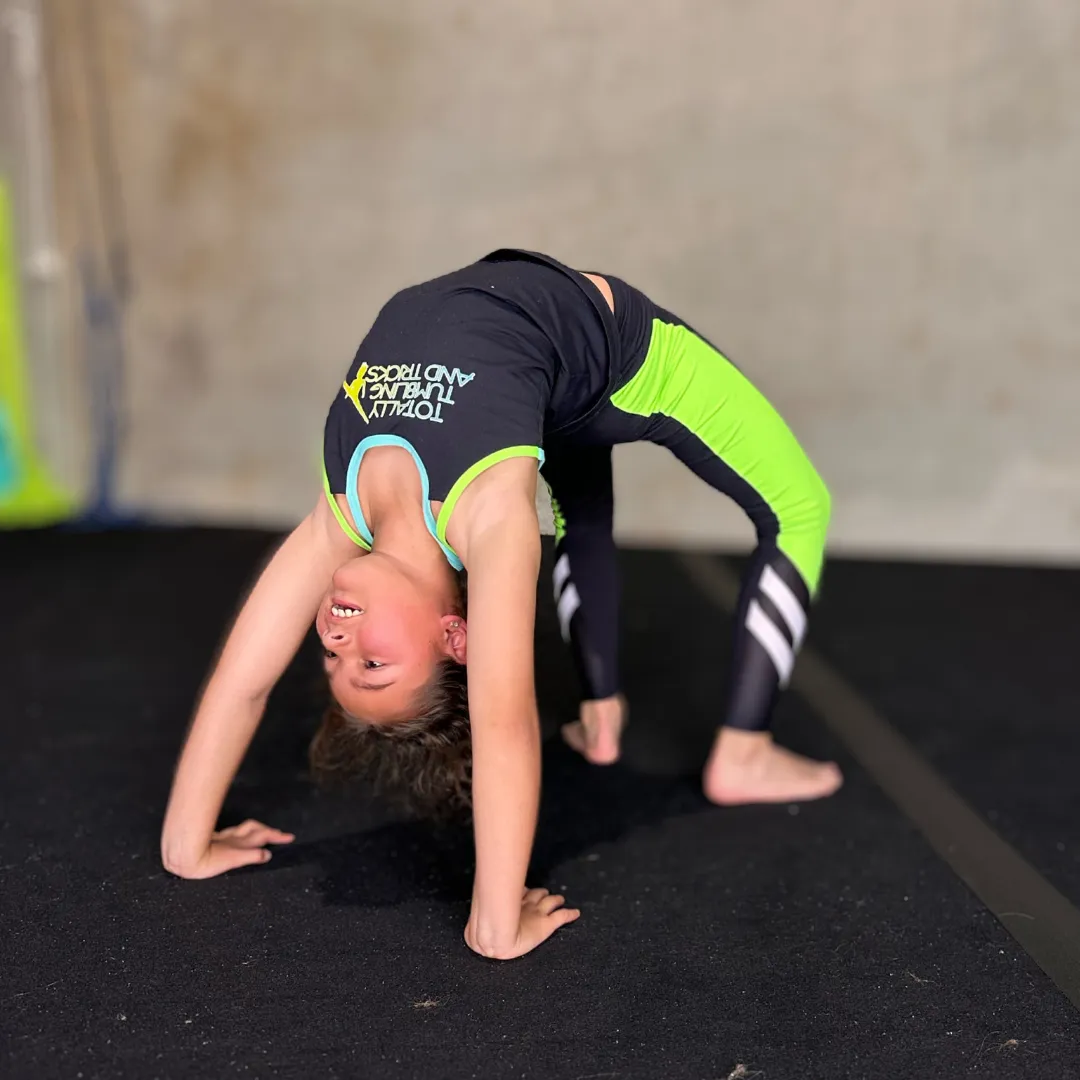
Why Kids Love Being Upside Down, and Why It's So Good For Them
There's a moment that happens in almost every kids' class here.
A child who's been a little unsure, a little hesitant, gets upside down for the first time. Maybe it's a forward roll. Maybe it's a cartwheel. Maybe it's hanging from the lyra with the world flipped around them. And something shifts. You can see it on their face before they even come back the right way up.
I used to think that was just the fun of it. The novelty, the giggles, the "did you see me?" moment. But the more I've learned about child development, the more I've realised there's something much deeper going on.
Going upside down is genuinely good for children's brains.
What's Actually Happening Neurologically
When a child goes upside down, their vestibular system lights up. The vestibular system lives in the inner ear and it's one of the most important sensory systems in the body. It tells the brain where the body is in space, which way is up, how fast things are moving, and how to stay balanced.
In early childhood, this system is still developing. It needs input. It needs challenge. Rolling, spinning, hanging, tumbling and inverting are exactly the kind of experiences that build and strengthen those neural pathways.
A well-developed vestibular system doesn't just help with balance. It's closely connected to a child's ability to focus, to regulate their emotions, to process what they're reading and hearing, and to move with coordination and confidence. Occupational therapists and child development researchers have long understood that sensory-rich movement in early childhood lays groundwork that shows up later in learning, attention and self-regulation.
So when your child is upside down hanging off the silks, their brain isn't on a break. It's working hard.
The Confidence You Can't Teach in a Classroom
Here's the thing about going upside down that I find most interesting from a psychological point of view.
It's mildly scary. For most kids, at first, inverting feels uncertain. The world looks wrong. Their body isn't used to it. Their instinct is to hesitate.
And that hesitation, and then the decision to try anyway, is where something really important happens.
Psychologists call it mastery experience, and it's one of the most powerful ways humans build genuine confidence. Not the kind of confidence that comes from being told "you're amazing" but the kind that comes from doing something your body wasn't sure about and finding out it was okay. That you were capable. That you could trust yourself.
Every time a child overcomes a small moment of uncertainty, their brain updates its picture of what they can handle.
Repeated often enough, that starts to look like a child who tries new things. Who doesn't give up when something feels hard. Who believes, quietly and solidly, that they're capable.
That's not a small thing. That follows them into every other part of their life.
It Also Just Feels Amazing
I don't want to make this all sound too serious, because the truth is, kids go upside down because it's joyful.
Many children find hanging, rolling and inverting incredibly regulating. Once the initial novelty wears off, it can help them feel calmer, more organised and more connected to their bodies. It's one of the reasons children who seek out spinning, hanging and rolling aren't being difficult. Their nervous systems are asking for something they genuinely need.
When kids get that input in a structured, safe environment, with apparatus designed for it and guidance from someone who knows what they're doing, they tend to settle. Focus better. Feel more at home in their own bodies.
What This Looks Like at TT&T
This is one of the reasons we're such big believers in tumbling and aerial. They naturally provide the kind of movement experiences children's brains and bodies are designed to learn from. Tumbling, aerial silks, lyra, trapeze. All of it involves inverting, spinning, hanging and swinging, the very things that challenge a developing vestibular system.
We start where every child is. Nobody is rushed into something their body isn't ready for. A forward roll is celebrated just as much as a backflip, because developmentally, that forward roll might be doing exactly as much work.
For our preschoolers especially, we've built the program around Trixy, who helps the littlest ones feel safe enough to try. Because at that age, the whole point is just giving their developing brains and bodies the rich movement experiences they're wired to need.
If you've got a child who loves to hang off things, climb everything, spin until they fall over and generally turn the world upside down, I'd gently suggest this: that's not a problem to solve. That's a nervous system doing its job.
After ten years of teaching children, I've noticed something. The kids who spend time hanging, rolling, climbing and turning themselves upside down don't just learn physical skills. They learn that they can do hard things.
And that's a lesson that stays with them long after they've landed back on their feet.
